

For energy-intensive industries, this is no longer just an annoying inflationary pressure on overheads. It has become the single biggest threat to operational margins. How do you forecast a three-year budget when one of your primary input costs could leap by 15% to 20% year-on-year, unpredictably?
The traditional approach of simply absorbing these costs or attempting to pass them onto customers is becoming unsustainable. To protect the bottom line, industrial players must shift their strategy from passive consumption to active energy management.
This is the definitive financial case for custom, grid-tied industrial solar.
At Imvelo Energy, we find that many industrial clients hesitate on solar because they focus on the upfront capital expenditure (Capex). While understandable, this view is shortsighted in the current tariff environment. The only metric that truly matters for long-term financial health is the Levelized Cost of Energy (LCOE).
Simply put, the LCOE is the average total cost to build and operate a power-generating asset over its lifetime divided by the total energy output of the system over that lifetime. It gives you a true "price per kWh" for your solar energy over 20 to 25 years.
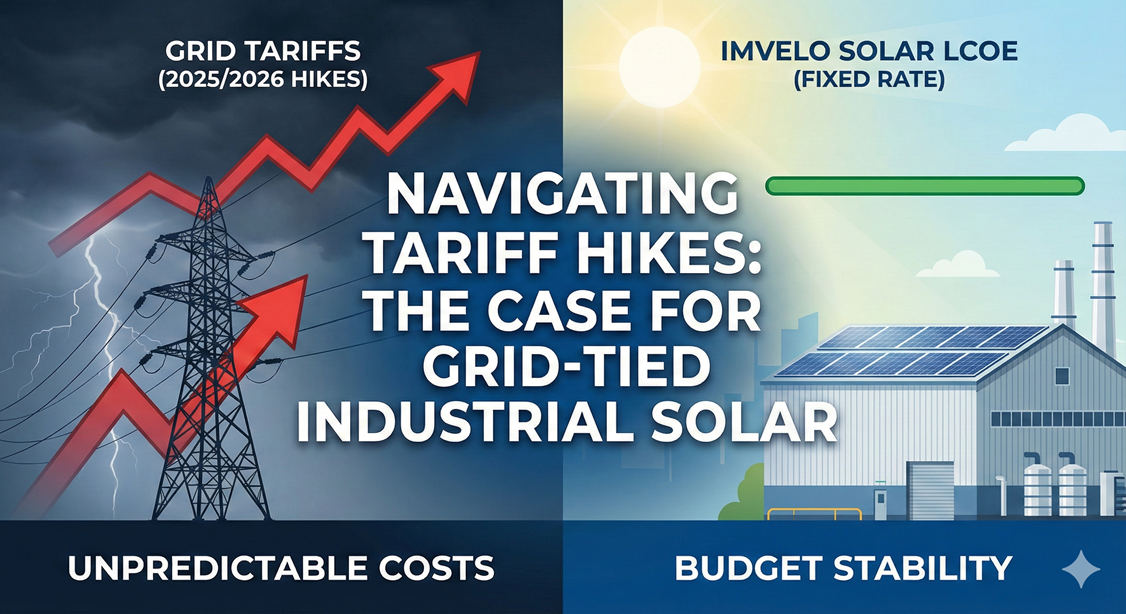
The comparison between solar LCOE and grid tariffs is stark:
An Imvelo Energy solar plant does more than just lower your blended energy rate; it provides budget certainty.
By locking in a significant portion of your daytime energy demand at a fixed LCOE—which is already substantially lower than current grid peak rates—you insulate your operation from future tariff shocks. You move from being a victim of utility pricing decisions to having control over your energy destiny.
In the face of the 2025/2026 hikes, waiting is the most expensive option. Contact Imvelo Energy today to model your facility's projected 5-year grid costs versus the stability of a custom solar solution.


